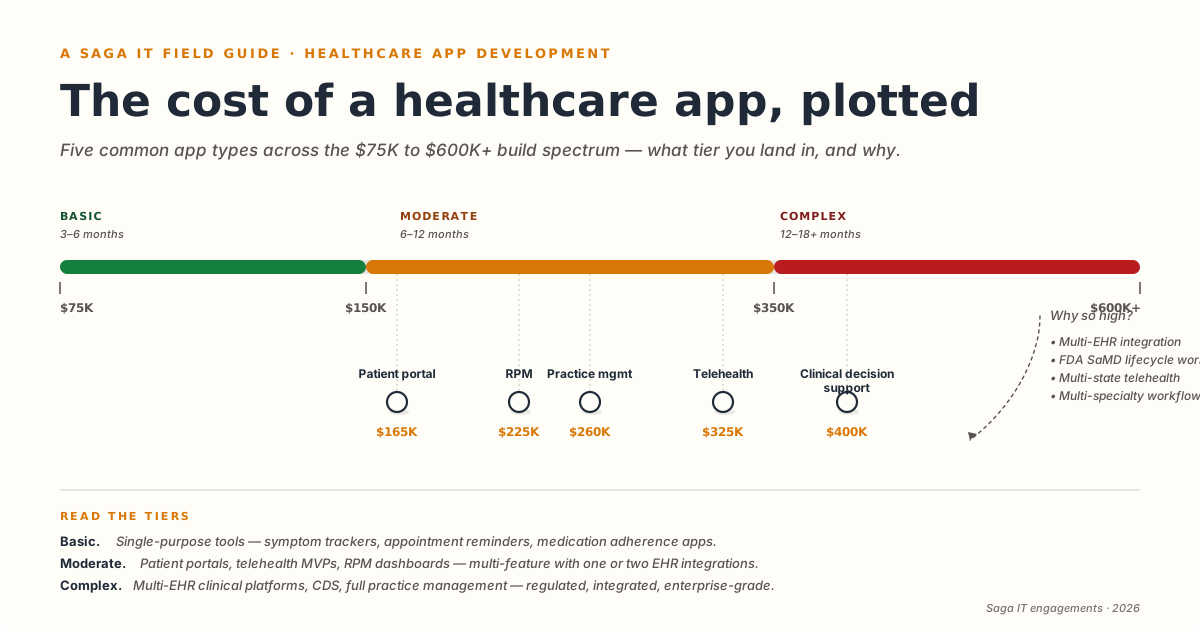
Healthcare app development costs more than general-purpose software development. The combination of HIPAA compliance requirements, EHR integration complexity, clinical workflow design, and regulatory testing adds layers of effort and expense that do not exist in other industries. Understanding these costs upfront prevents budget surprises and helps you make informed build-vs-buy decisions.
This guide provides realistic cost ranges based on current market rates for healthcare app development in 2026, broken down by app type, development phase, and the compliance and integration costs that are unique to healthcare.
Healthcare App Cost Overview
Healthcare app development costs range from $40,000 for a basic patient-facing tool to over $425,000 for a complex clinical platform with multiple EHR integrations. The wide range reflects the enormous variation in scope, compliance requirements, and integration complexity.
Cost ranges by complexity level:
| Complexity | Cost Range | Timeline | Examples |
|---|---|---|---|
| Basic | $40K–$95K | 3–6 months | Single-function patient tools, appointment reminders, medication trackers |
| Moderate | $95K–$220K | 6–12 months | Patient portals, telehealth MVPs, RPM dashboards |
| Complex | $220K–$425K+ | 12–18 months | Multi-EHR clinical platforms, clinical decision support, full practice management |
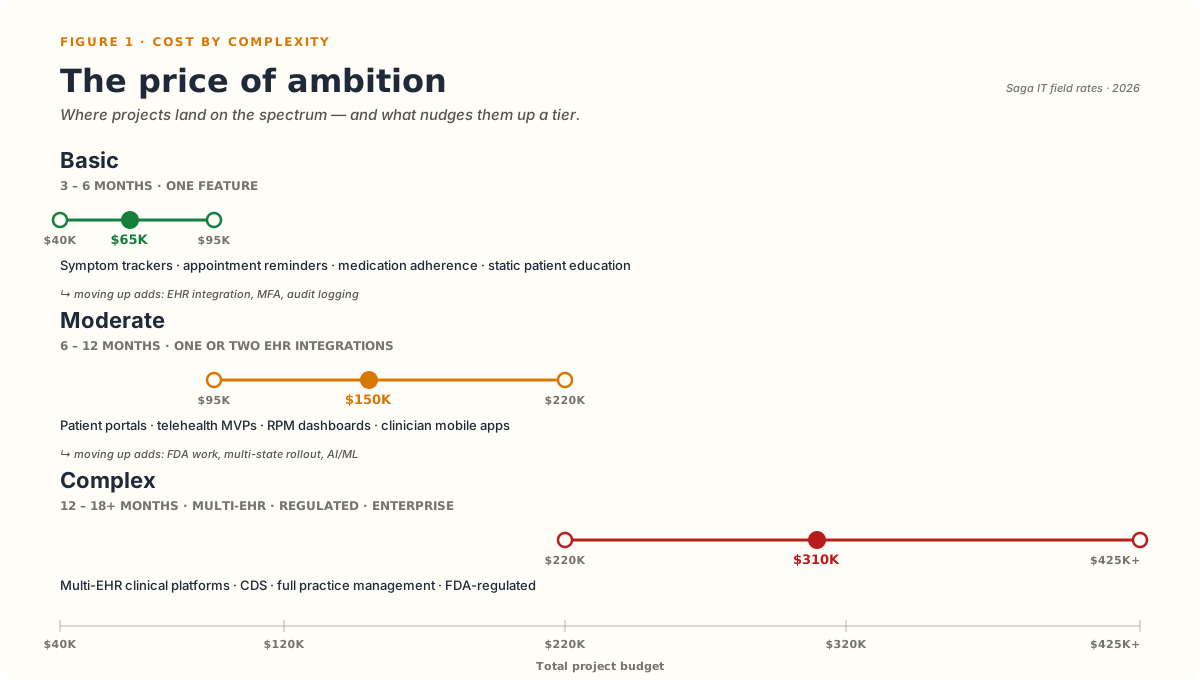
These ranges assume US-based or hybrid development teams with healthcare experience. Offshore-only teams may quote 30-50% lower, but the hidden costs of compliance remediation, integration rework, and extended timelines frequently eliminate the savings.
Cost by Healthcare App Type
Each category of healthcare app has distinct requirements that drive cost. The ranges below include design, development, testing, and basic HIPAA compliance, but exclude ongoing maintenance, hosting, and EHR integration (addressed separately).
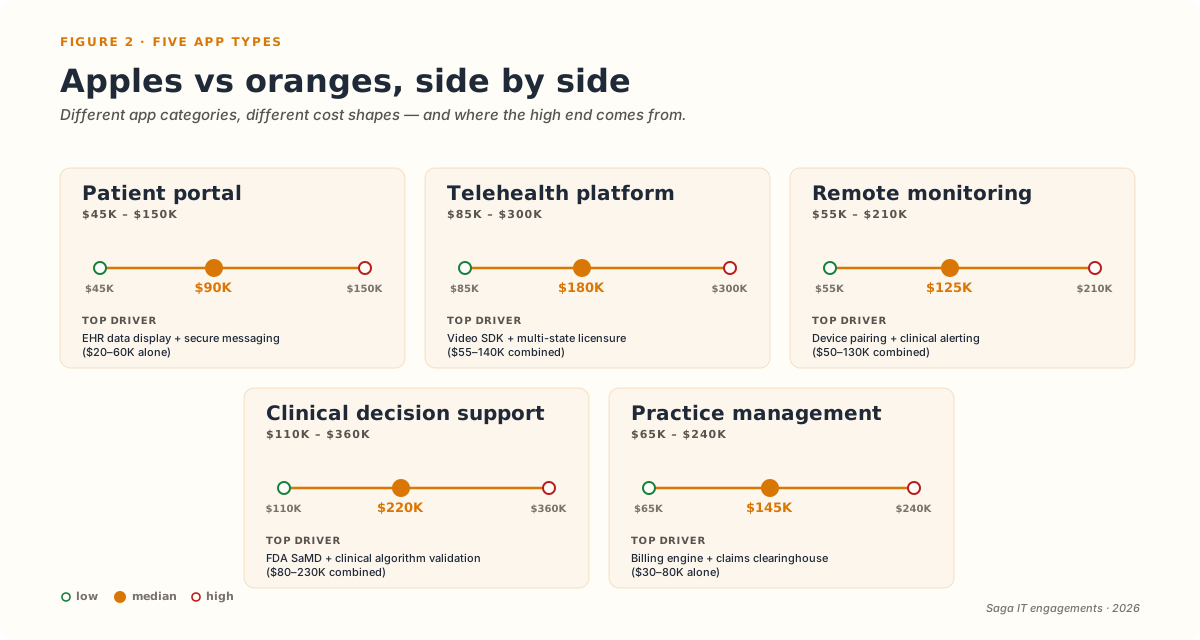
Patient Portal ($45K–$150K)
Patient portals provide secure access to health records, appointment scheduling, messaging, and bill pay. Cost drivers include:
- Authentication and identity verification ($8K–$20K): Multi-factor authentication, identity proofing for patient onboarding, and proxy access for caregivers
- EHR data display ($8K–$50K): Rendering clinical data (labs, medications, conditions, immunizations) from FHIR or HL7 sources in a patient-friendly format
- Secure messaging ($8K–$20K): HIPAA-compliant messaging with provider teams, including attachment handling and read receipts
- Appointment scheduling ($8K–$25K): Real-time availability checks, booking, rescheduling, and cancellation workflows integrated with practice management systems
- Payment processing ($6K–$15K): PCI-compliant payment integration for copays, outstanding balances, and payment plans
Patient portals at the lower end of the range typically connect to a single EHR system and offer core features. Higher-end portals support multiple provider organizations, complex insurance eligibility checks, and patient-reported outcomes collection.
Telehealth Platform ($85K–$300K)
Telehealth platforms involve real-time video, clinical documentation, and often prescribing and billing workflows. The technology and compliance requirements are substantial:
- Video infrastructure ($25K–$65K): HIPAA-compliant video with adaptive bitrate, low-latency streaming, screen sharing, and recording. Most teams build on Twilio Video (Twilio reversed its 2024 EOL decision and continues investing in the product), Vonage Video API, Amazon Chime SDK, or Zoom Video SDK rather than building video infrastructure from scratch. All four offer HIPAA BAAs as of 2026.
- Virtual waiting room and scheduling ($12K–$28K): Patient queue management, provider availability, and on-demand vs. scheduled visit workflows
- Clinical documentation ($15K–$40K): Visit note templates, diagnosis and procedure coding, e-prescribing integration, and referral workflows
- Multi-state compliance ($10K–$28K): Telehealth regulations vary by state. License verification, consent management, and prescribing rules must be configurable per jurisdiction.
- Billing integration ($12K–$32K): Telehealth-specific CPT codes, modifier handling, and real-time eligibility verification
The wide cost range reflects the difference between a focused telehealth MVP (single specialty, one state, scheduled visits only) and a comprehensive platform supporting multiple specialties, all 50 states, and both synchronous and asynchronous care models.
Remote Patient Monitoring App ($55K–$210K)
RPM apps collect data from connected devices (blood pressure monitors, glucometers, pulse oximeters, weight scales) and present it to care teams for clinical review:
- Device integration ($18K–$50K): Bluetooth and cellular device pairing, data normalization across device manufacturers, and handling unreliable connectivity
- Clinical alerting ($12K–$32K): Threshold-based alerts, trending analysis, and escalation workflows that route to the right clinician
- Patient engagement ($8K–$22K): Reminders, educational content, symptom surveys, and gamification elements to drive adherence
- Care team dashboard ($12K–$32K): Population-level views, individual patient drill-downs, and intervention documentation
- Billing and reimbursement ($10K–$22K): RPM-specific CPT codes (99453 device setup, 99454 device supply 16+ days, 99457 first 20 min management, 99458 additional 20 min increments) plus the new 2026 codes: 99445 (device supply for 2-15 day data periods, replacing the old 16-day minimum) and 99470 (first 10 min of RPM management with required patient interaction). Time tracking for billing and automated claim generation.
RPM apps at the lower end support a handful of device types for a single condition (e.g., hypertension monitoring). Higher-end platforms handle dozens of device types across multiple chronic conditions with sophisticated clinical algorithms.
Clinical Decision Support ($110K–$360K)
CDS applications analyze clinical data and provide real-time recommendations to clinicians. These are among the most complex and expensive healthcare apps to build:
- Clinical algorithm development ($30K–$95K): Translating evidence-based guidelines into computable logic. Requires collaboration between clinical experts and developers.
- EHR integration ($15K–$80K): CDS tools must read patient data from the EHR in real time (often via CDS Hooks or SMART on FHIR) and present recommendations within the clinical workflow.
- Evidence management ($12K–$32K): Clinical guidelines change. The system needs a mechanism for updating clinical logic without code deployments.
- FDA regulatory considerations ($20K–$55K): Many CDS tools meet the FDA’s definition of Software as a Medical Device. Regulatory strategy, documentation, and potential 510(k) submission add significant cost. See our IEC 62304 compliance guide for the SaMD lifecycle work this typically entails, or our healthcare software development practice for engagement scope.
- Validation and testing ($20K–$55K): Clinical validation requires testing against real clinical scenarios with clinician review of outputs. This is more rigorous and time-consuming than standard QA.
Budget the clinical decision support integration work separately from the algorithm itself. The two rarely land on the same team or the same schedule.
Practice Management System ($65K–$240K)
Practice management systems handle scheduling, registration, billing, and administrative workflows for healthcare organizations:
- Scheduling engine ($15K–$38K): Multi-provider, multi-location scheduling with template management, overbooking rules, and waitlist management
- Patient registration ($8K–$22K): Demographics capture, insurance card scanning, consent management, and integration with eligibility verification services
- Billing and claims ($18K–$50K): Charge capture, claim generation (837P/837I), clearinghouse integration, ERA/EOB processing (835), denial management, and patient statements
- Reporting and analytics ($8K–$25K): Financial dashboards, productivity metrics, A/R aging, and payer performance analysis
- Compliance features ($8K–$20K): Audit logging, role-based access controls, and Meaningful Use / MIPS reporting support
HIPAA Compliance Costs
HIPAA compliance adds 15-30% to the base development cost of any healthcare application. This is not a one-time expense: it affects architecture, development practices, testing, and ongoing operations.
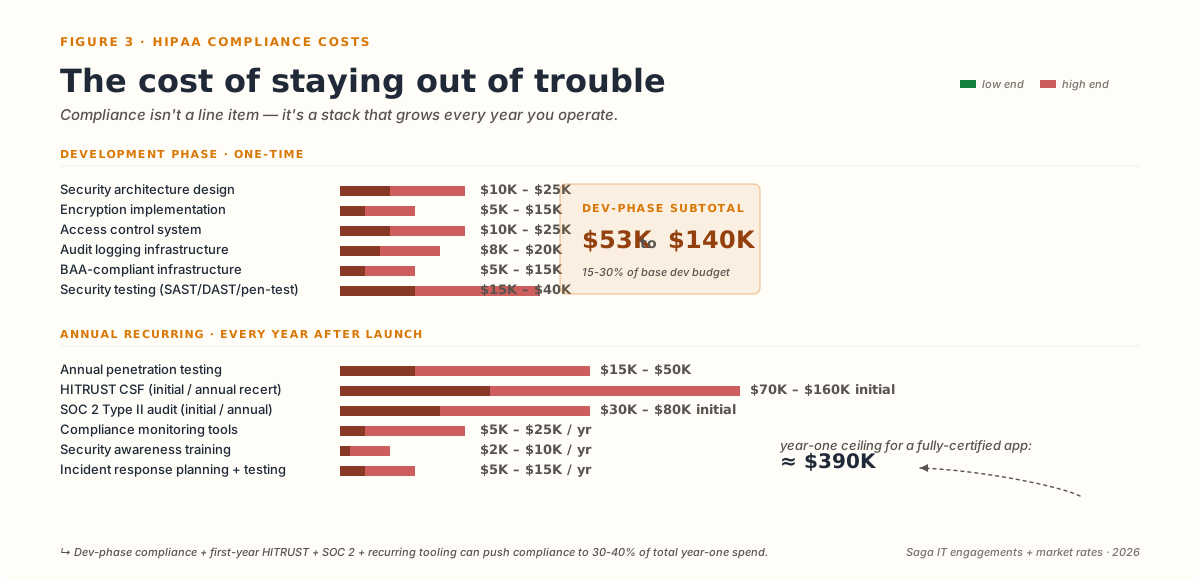
Development Phase Compliance Costs
| Requirement | Typical Cost | Notes |
|---|---|---|
| Security architecture design | $10K–$25K | Threat modeling, data flow analysis, control selection |
| Encryption implementation | $5K–$15K | TLS 1.2+, AES-256 at rest, key management |
| Access control system | $10K–$25K | RBAC, session management, audit logging |
| Audit logging infrastructure | $8K–$20K | Immutable logs, tamper detection, retention policies |
| BAA-compliant infrastructure | $5K–$15K | HIPAA-eligible cloud services, compliant configurations |
| Security testing | $15K–$40K | SAST, DAST, penetration testing, vulnerability assessment |
Ongoing Compliance Costs
- Annual penetration testing: $15K–$50K
- HITRUST CSF certification: $70K–$160K initial (healthcare orgs typically $80K–$120K for i1 tier), $30K–$80K annual recertification (e1 ~$35K, i1 ~$70-120K, r2 $100K+)
- SOC 2 Type II audit: $30K–$80K initial, $20K–$50K annual
- Compliance monitoring tools: $5K–$25K/year
- Security awareness training: $2K–$10K/year
- Incident response planning and testing: $5K–$15K/year
For a detailed breakdown of HIPAA compliance requirements and how they affect software architecture, see our compliance consulting services.
EHR Integration Costs
EHR integration is one of the most variable cost drivers in healthcare app development. The cost depends on the EHR system, integration method, data volume, and whether you need certification for distribution.
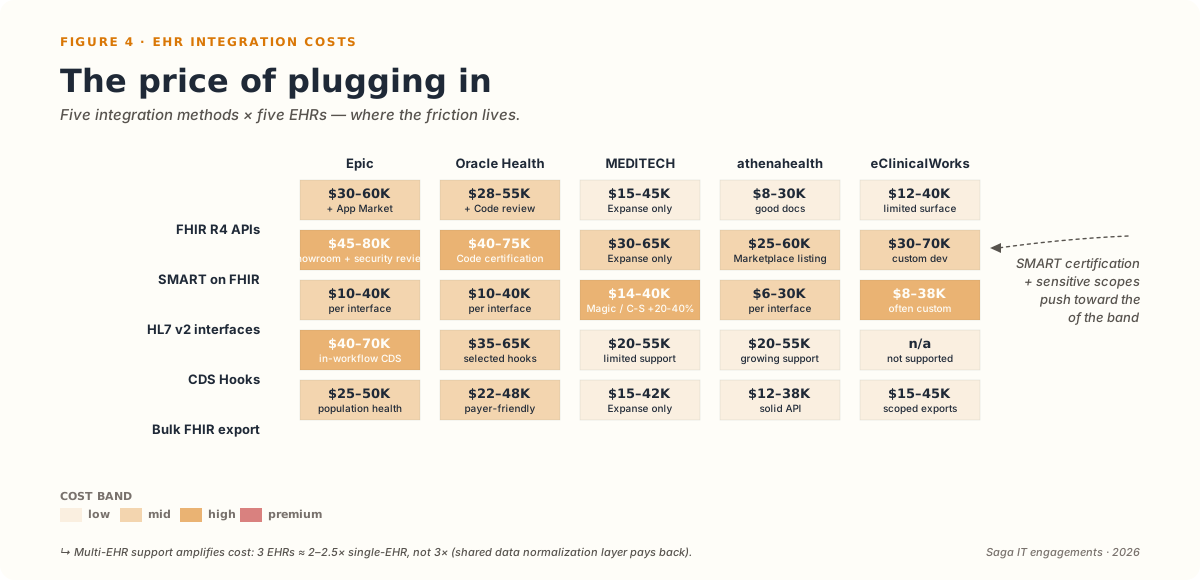
Cost by Integration Method
| Method | Cost Range | Timeline | Best For |
|---|---|---|---|
| FHIR R4 APIs | $8K–$60K | 2–10 weeks | Patient data read, clinical queries, patient-facing apps |
| SMART on FHIR | $15K–$80K | 3–12 weeks | Embedded EHR apps, clinical tools launched from the chart |
| HL7 v2 interfaces | $4K–$40K per interface | 1–8 weeks | Lab results, ADT feeds, orders, scheduling |
| CDS Hooks | $15K–$70K | 4–10 weeks | Real-time clinical decision support within EHR workflow |
| Bulk FHIR export | $10K–$50K | 2–8 weeks | Population health, analytics, data warehousing |
Ranges span a wide scope deliberately. A simple read-only ADT feed against an existing Mirth Connect channel can land at the low end; a bidirectional interface with custom Z-segments, vendor-specific quirks, and a full ack-handling test plan lands at the high end. Saga IT’s per-interface work is calibrated to the actual scope, not industry-typical agency markups.
Cost by EHR System
Integration costs vary significantly across EHR vendors:
- Epic: Well-documented FHIR APIs, but App Market certification adds $20K–$50K in effort and 4–8 weeks to the timeline. Epic’s security review process is thorough.
- Oracle Health (Cerner): Millennium platform supports FHIR R4, HL7 v2, and proprietary APIs. Code certification process is similar in scope to Epic’s.
- MEDITECH: Newer Expanse platform supports FHIR. Older Magic and Client/Server platforms require HL7 v2 or proprietary interfaces, which can increase costs by 20–40%.
- athenahealth: REST APIs with good documentation. Marketplace listing is required for distribution.
- eClinicalWorks: Integration capabilities are more limited. Expect higher costs for custom interface development.
Multi-EHR integration compounds costs significantly. Supporting three or more EHR systems typically costs 2–3x a single integration, not 3x, because you can reuse data normalization and UI components. But each EHR’s testing and certification process is independent.
Development Timeline by Phase
Healthcare app development follows a predictable sequence of phases, though timelines vary with complexity.
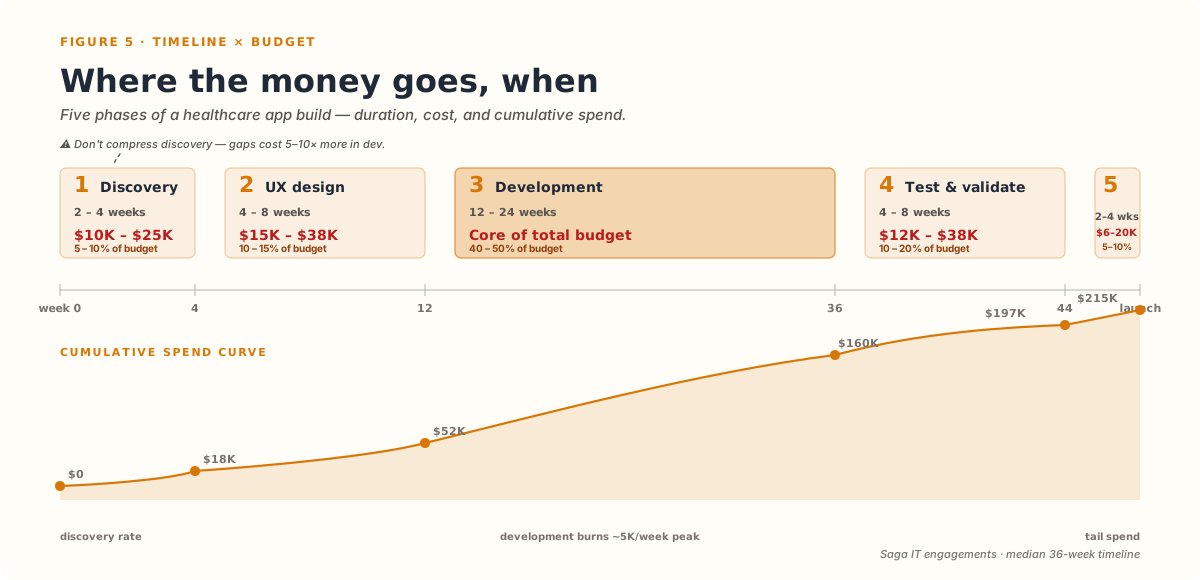
Discovery and Planning (2–4 Weeks, $10K–$25K)
- Requirements gathering with clinical and administrative stakeholders
- Regulatory analysis (HIPAA, FDA, state-specific requirements)
- Integration architecture and EHR vendor engagement
- Technical architecture and infrastructure planning
- Project roadmap and milestone definition
Do not skip or compress discovery. The cost of requirements gaps discovered during development is 5–10x the cost of finding them during discovery.
UX Design (4–8 Weeks, $15K–$38K)
- Clinical workflow mapping and task analysis
- User research with clinicians, patients, and administrators
- Wireframes and interactive prototypes
- Usability testing with representative users
- Accessibility compliance (WCAG 2.1 AA minimum)
- Design system and component library
Healthcare UX design takes longer than general consumer app design because clinical workflows are complex, error consequences are severe, and user populations (clinicians, patients, administrators) have very different needs and technical literacy.
Development (12–24 Weeks, Core of Total Budget)
- Backend API development and database architecture
- Frontend application development (web, iOS, Android, or cross-platform)
- HIPAA compliance implementation (encryption, access controls, audit logging)
- EHR integration development and testing
- Third-party service integration (payment, notification, identity verification)
Development timelines for healthcare apps tend to be longer than comparable non-healthcare apps because of compliance requirements, integration complexity, and the need for clinical validation at each milestone.
Testing and Validation (4–8 Weeks, $12K–$38K)
- Functional testing (unit, integration, end-to-end)
- Security testing (SAST, DAST, penetration testing)
- Compliance validation (HIPAA controls verification)
- Performance and load testing
- Clinical validation with healthcare stakeholders
- User acceptance testing
- Integration testing with live EHR sandbox environments
Deployment and Launch (2–4 Weeks, $6K–$20K)
- Production infrastructure provisioning and hardening
- Data migration (if replacing an existing system)
- EHR go-live coordination with health system IT teams
- User training and documentation
- Monitoring and alerting configuration
- Launch support and hypercare period
Maintenance and Hosting Costs
Healthcare apps require more intensive ongoing maintenance than typical SaaS products. Budget $2K–$15K per month depending on scale and complexity.
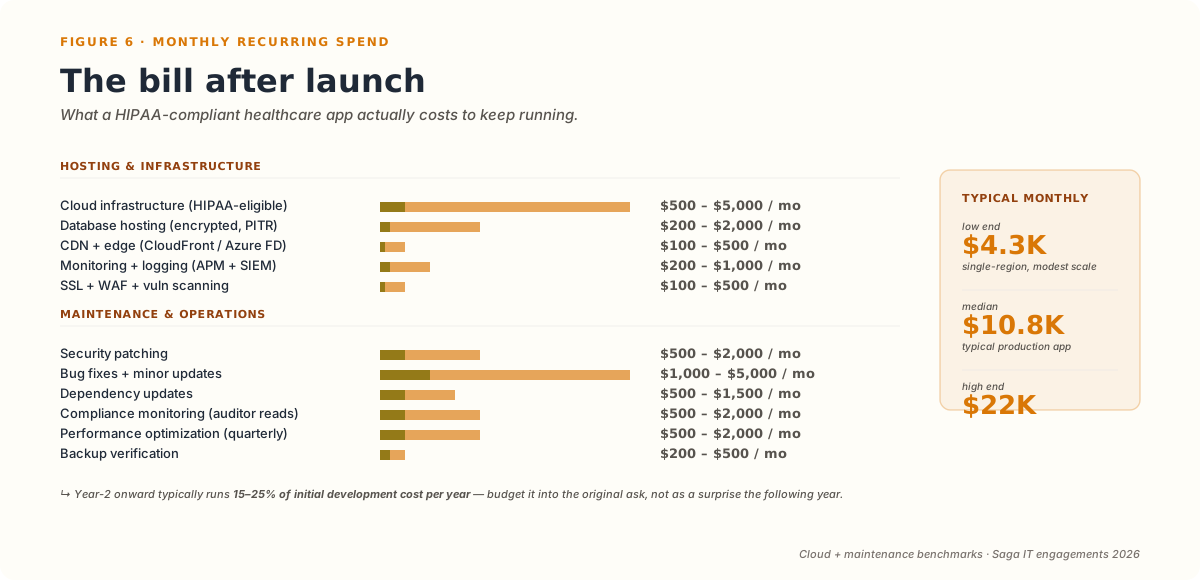
Monthly Hosting Costs
| Component | Cost Range | Notes |
|---|---|---|
| Cloud infrastructure (HIPAA-eligible) | $500–$5,000/mo | AWS, Azure, or GCP with BAA; scales with traffic and data |
| Database hosting | $200–$2,000/mo | Encrypted, backed up, with point-in-time recovery |
| CDN and edge services | $100–$500/mo | Content delivery, DDoS protection |
| Monitoring and logging | $200–$1,000/mo | Application performance monitoring, SIEM integration |
| SSL certificates and security tools | $100–$500/mo | WAF, vulnerability scanning, certificate management |
Monthly Maintenance Costs
| Activity | Cost Range | Frequency |
|---|---|---|
| Security patching | $500–$2,000/mo | Continuous |
| Bug fixes and minor updates | $1,000–$5,000/mo | Ongoing |
| Dependency updates | $500–$1,500/mo | Monthly |
| Compliance monitoring | $500–$2,000/mo | Continuous |
| Performance optimization | $500–$2,000/mo | Quarterly focus |
| Backup verification | $200–$500/mo | Monthly |
Build vs. Buy Decision Framework
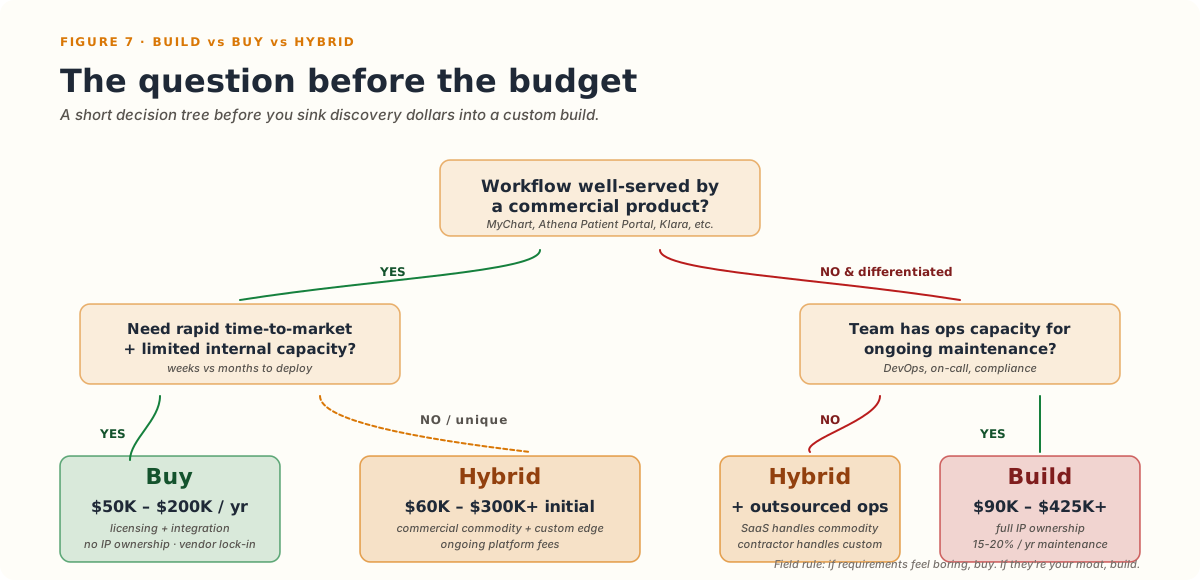
Before committing to custom development, evaluate whether an existing platform can meet your needs.
When to Buy (Use an Existing Platform)
- Your requirements are well-served by commercial products. If your patient portal needs are standard, platforms like MyChart, Athena Patient Portal, or Klara may be more cost-effective than custom development.
- Time to market is critical. Commercial platforms can be deployed in weeks. Custom development takes months.
- Your organization lacks technical capacity for ongoing maintenance and operations.
- The workflow is well-established with little need for differentiation.
When to Build Custom
- Your workflow is genuinely unique and no commercial product supports it without extensive customization.
- The application is a competitive differentiator for your organization.
- You need deep integration with multiple systems in ways that commercial products do not support.
- Regulatory requirements (such as FDA SaMD classification) demand full control over the development process and documentation.
- You need full ownership of the intellectual property and data architecture.
The Hybrid Approach
Many organizations use a hybrid strategy: commercial platforms for commodity functions (EHR, billing, scheduling) and custom development for differentiated capabilities (proprietary clinical algorithms, novel patient engagement workflows, specialized analytics). This approach optimizes cost while preserving competitive advantage.
Hidden Costs to Budget For
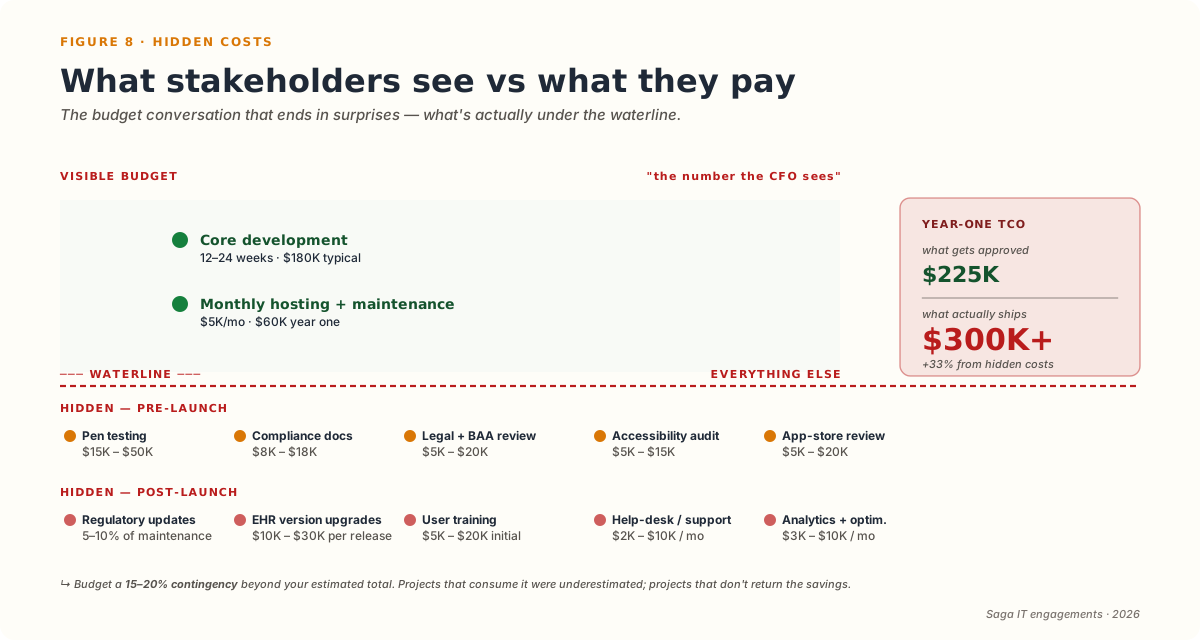
These costs are frequently overlooked during initial planning:
Pre-Launch Hidden Costs
- Penetration testing: $15K–$50K per assessment. Required before any production deployment handling PHI.
- Compliance documentation: $10K–$25K for the initial compliance package (policies, procedures, risk assessment, BAA templates).
- Legal review: $5K–$20K for BAA review, privacy policy development, and terms of service.
- Accessibility audit: $5K–$15K for WCAG 2.1 compliance assessment and remediation.
- App store review and certification: $5K–$20K for Apple/Google health app reviews, which have stricter requirements for health-related applications.
Post-Launch Hidden Costs
- Regulatory updates: 5–10% of annual maintenance budget for changes required by new regulations or updated guidance.
- EHR version upgrades: When an EHR vendor releases a major update, your integration may need updates. Budget $10K–$30K per major EHR release.
- User training: $5K–$20K for initial training, plus $2K–$10K annually for ongoing training and onboarding materials.
- Help desk and user support: $2K–$10K/month for Level 1 and Level 2 support depending on user volume.
- Analytics and optimization: $3K–$10K/month for usage analytics, A/B testing infrastructure, and data-driven product improvements.
Budget Planning Tips
Start with Discovery
Invest $15K–$40K in a formal discovery phase before committing to a full development budget. Discovery produces the detailed requirements, compliance plan, and integration architecture that make accurate budgeting possible. Without discovery, cost estimates are guesses.
Budget in Phases
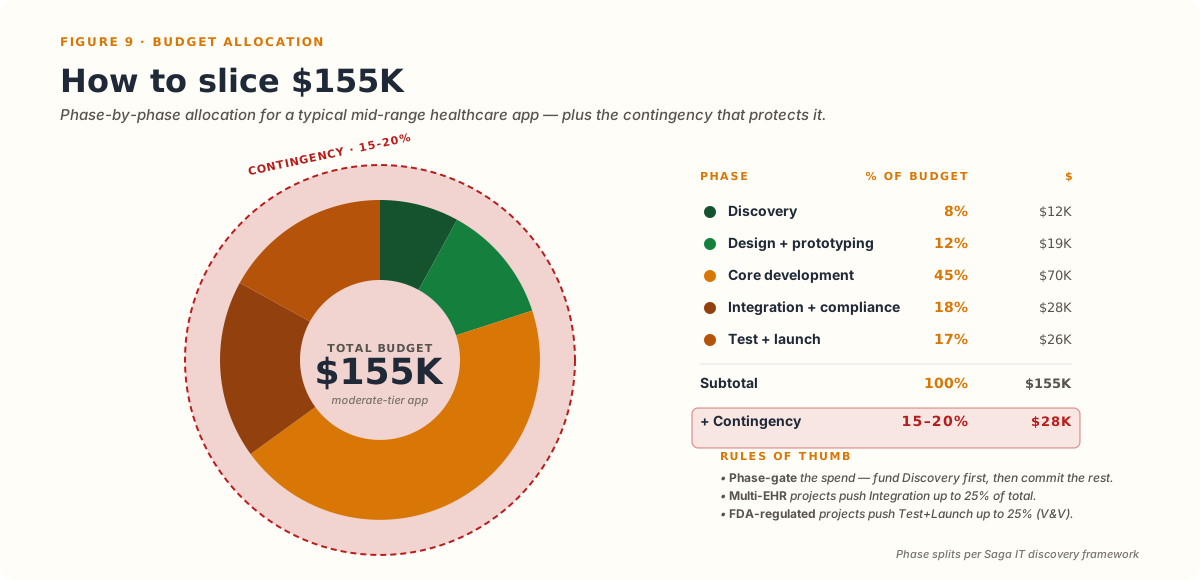
Rather than funding the entire project upfront, structure your budget in phases aligned with development milestones:
- Discovery and planning (5–10% of total budget)
- Design and prototyping (10–15%)
- Core development (40–50%)
- Integration and compliance (15–20%)
- Testing, validation, and launch (10–15%)
This approach provides natural checkpoints for evaluating progress and adjusting scope before additional funds are committed.
Include a Contingency
Healthcare app projects encounter unexpected complexity more frequently than general software projects, usually in EHR integration and compliance areas. Budget a 15–20% contingency beyond your estimated total. Projects that consume the contingency were underestimated. Projects that do not need it return the savings.
Plan for Year Two
Your budget should not end at launch. Include 12 months of post-launch maintenance, hosting, and compliance costs in your initial budget request. The first year after launch typically costs 20–30% of the initial development investment.
Get Multiple Estimates
Obtain detailed proposals from at least three qualified healthcare app development firms. Wide variation between estimates (more than 2x) usually indicates that the vendors are interpreting the requirements differently, which suggests your requirements need refinement.
Saga IT builds custom healthcare applications with built-in HIPAA compliance, EHR integration, and clinical workflow design. For a detailed estimate based on your specific requirements, contact our team. See our healthcare app development services and HIPAA compliance consulting for more on our approach.