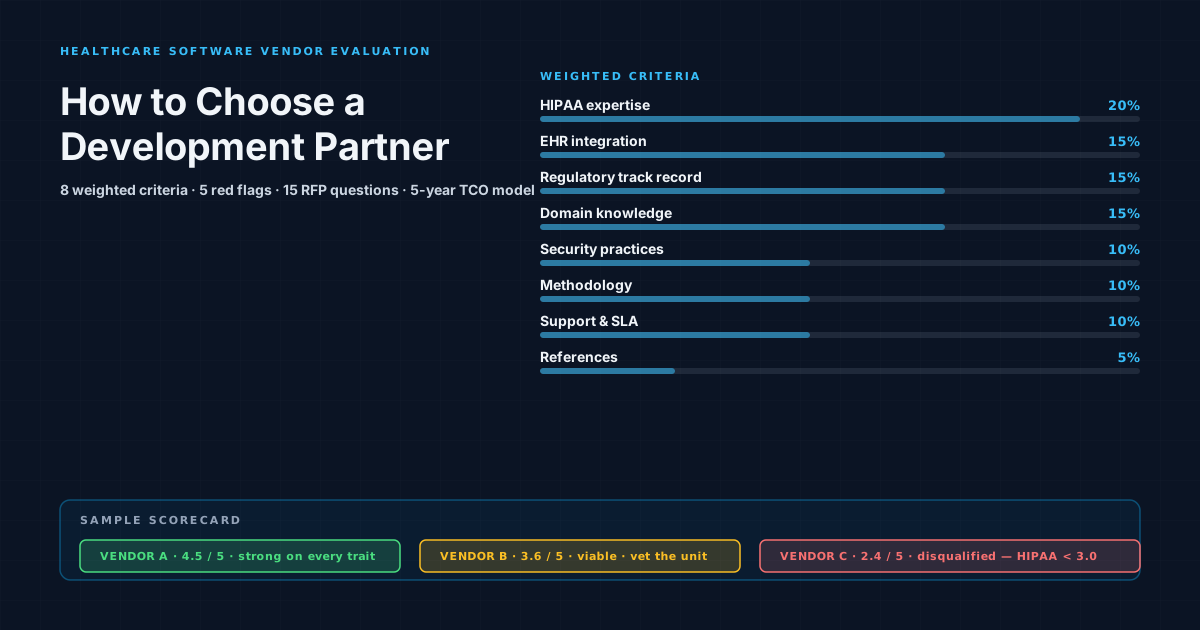
Choosing the wrong healthcare software development partner is expensive in ways that go beyond budget overruns. A vendor without genuine regulatory expertise can ship software that fails a HIPAA audit, exposes patient data, or cannot pass the security reviews required to integrate with major EHR systems. The stakes in healthcare IT are fundamentally different from general software development, and the evaluation process should reflect that.
This guide walks through the criteria that matter most when evaluating healthcare software development companies, the red flags that should disqualify a vendor early, and the questions you should be asking in every RFP.
Why Healthcare Software Development Is Different
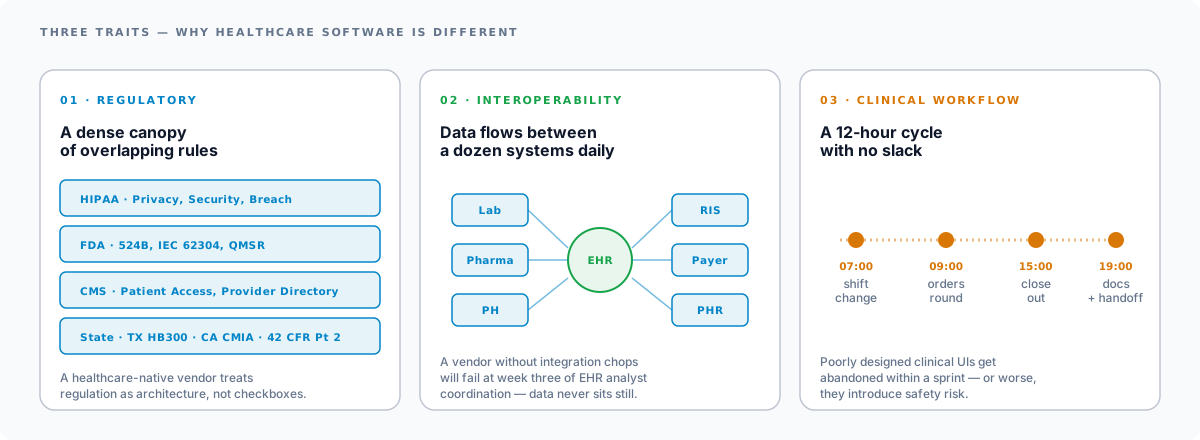
Building software for healthcare is not simply adding a login page and encrypting a database. The regulatory, technical, and clinical requirements create constraints that most general-purpose development firms are not equipped to handle.
Regulatory Compliance Is Non-Negotiable
Every system that touches protected health information (PHI) must comply with HIPAA’s Privacy Rule, Security Rule, and Breach Notification Rule. Depending on the product, you may also face FDA software regulations (especially for clinical decision support or Software as a Medical Device), state-specific privacy laws, and payer-specific requirements like CMS interoperability rules. A development partner that treats compliance as a checkbox rather than an architectural concern will create technical debt that compounds with every release.
Interoperability Is a Core Requirement
Healthcare software does not exist in isolation. Patient data flows between EHR systems, labs, imaging centers, pharmacies, payers, and public health agencies. Your development partner needs hands-on experience with HL7 v2, FHIR R4, X12 EDI, DICOM, and the integration engines that route messages between systems. If a vendor cannot explain how they would connect your application to Epic, Oracle Health (formerly Cerner), or MEDITECH, they are not ready for healthcare work.
Clinical Workflows Drive Design
Healthcare software must fit into the way clinicians actually work. Poorly designed interfaces increase documentation burden, introduce patient safety risks, and get abandoned. Your development partner should understand clinical workflows, not just user interface design in the abstract, but how a nurse documents vitals during a shift change, how a physician reviews lab results in context, or how a care coordinator tracks referrals across facilities.
8 Evaluation Criteria for Healthcare Software Development Companies
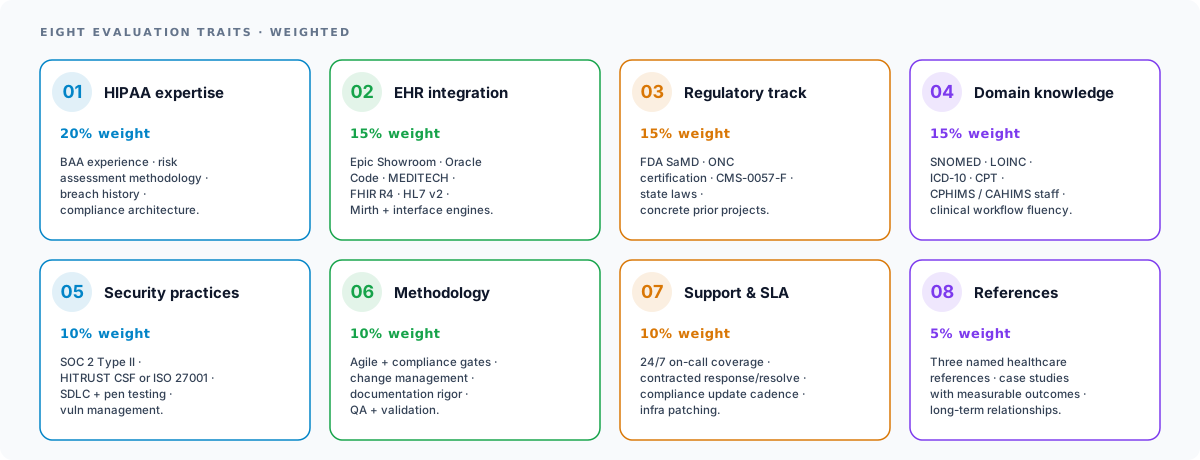
Use these criteria to build a structured scorecard when evaluating vendors. Weight each criterion based on your project’s specific needs, but do not skip any of them.
1. HIPAA Expertise and Compliance Track Record
This is the single most important differentiator. Ask specifically about:
- Business Associate Agreement (BAA) experience. How many BAAs has the vendor executed? Do they have a standard BAA, or do they negotiate custom terms?
- Security Risk Assessments. Has the vendor conducted formal security risk assessments per the HIPAA Security Rule? Can they walk you through their methodology?
- Breach history. Have any of their clients experienced a data breach related to software the vendor built? How was it handled?
- Compliance architecture patterns. Ask them to describe how they implement audit logging, access controls, encryption at rest and in transit, and automatic session termination in a typical healthcare application.
A firm with genuine HIPAA compliance expertise will answer these questions with specifics, not generalities. See our companion healthcare app development cost guide for what credible compliance work actually adds to a project budget.
2. EHR Integration Experience
If your product needs to connect to electronic health record systems (and most healthcare software does), your vendor’s integration experience is critical. Evaluate:
- Which EHR systems have they integrated with? Epic, Oracle Health (formerly Cerner), MEDITECH, Veradigm (formerly Allscripts, rebranded Jan 2023), athenahealth, and eClinicalWorks each have different integration pathways and certification requirements.
- What integration standards do they support? FHIR R4, SMART on FHIR, HL7 v2 (ADT, ORM, ORU, SIU), CDS Hooks, and C-CDA are the foundational standards.
- Have they taken an app through Epic Vendor Services (formerly App Orchard) to a Showroom listing, or through Oracle Health Code? These processes are rigorous and time-consuming. A vendor who has been through them understands the real-world requirements.
- Do they have experience with integration engines? Mirth Connect, Rhapsody, and similar tools are commonly used to route and transform healthcare messages.
3. Regulatory Track Record Beyond HIPAA
Healthcare software often intersects with multiple regulatory frameworks:
- FDA compliance for clinical decision support tools, diagnostic algorithms, and Software as a Medical Device (SaMD) under IEC 62304
- ONC certification for health IT products under the 21st Century Cures Act
- State regulations including state-specific consent requirements, telehealth licensing, and data residency rules
- CMS interoperability rules including the Patient Access API and Provider Directory requirements
Ask for specific examples of projects where the vendor navigated these regulatory requirements. Abstract claims of “regulatory expertise” are not sufficient.
4. Healthcare Domain Knowledge
Technical skills without healthcare context produce software that is technically sound but clinically unusable. Evaluate:
- Does the team include people with healthcare backgrounds? Clinical informaticists, former health system IT staff, or team members with healthcare certifications (CPHIMS, CAHIMS) bring essential domain expertise.
- Can they speak your language? A vendor building a revenue cycle management tool should understand charge capture, claim adjudication, and denial management. A vendor building a clinical application should understand SNOMED CT, LOINC, ICD-10, and CPT coding.
- Have they worked in your specific segment? Acute care, ambulatory, post-acute, behavioral health, dental, and payer organizations each have distinct workflows and technical requirements.
5. Security Practices
Beyond HIPAA’s minimum requirements, evaluate the vendor’s overall security posture:
- Do they hold any security certifications? SOC 2 Type II, HITRUST CSF, or ISO 27001 demonstrate a commitment to security that goes beyond project-specific compliance.
- What is their secure development lifecycle (SDLC)? Ask about threat modeling, static and dynamic code analysis, dependency scanning, and penetration testing practices.
- How do they handle vulnerability management? What is their process for patching dependencies, responding to CVEs, and remediating findings from security assessments?
- Do they support infrastructure security? If they are responsible for deployment, ask about network segmentation, intrusion detection, WAF configuration, and incident response procedures.
6. Development Methodology
Healthcare software projects benefit from iterative development with frequent clinical validation. Evaluate:
- Agile with healthcare-specific adaptations. Pure Scrum rarely works in healthcare without modifications for compliance reviews, clinical validation cycles, and regulatory holds.
- Change management. How does the vendor handle scope changes that affect compliance? A new feature that introduces a new category of PHI processing may require a security risk assessment update.
- Documentation standards. Healthcare software requires more documentation than typical SaaS products: design specifications, validation protocols, traceability matrices (especially for FDA-regulated software), and compliance evidence packages.
- Quality assurance. Ask about their testing approach: unit testing, integration testing, user acceptance testing with clinical stakeholders, and regression testing for compliance-critical functions.
7. Support and Maintenance Model
Healthcare systems cannot tolerate extended downtime. Evaluate post-launch support:
- SLA commitments. What are the response and resolution times for critical, high, medium, and low severity issues? Are these SLAs backed by contractual penalties?
- On-call coverage. Is 24/7 support available for production-critical issues? Healthcare does not operate on a 9-to-5 schedule.
- Compliance maintenance. Regulations change. How does the vendor handle updates required by new HIPAA guidance, CMS rules, or state legislation?
- Technology currency. How do they manage framework upgrades, library updates, and infrastructure patches without disrupting clinical operations?
8. References and Portfolio
Require specific, verifiable references:
- Client references in healthcare. Not just logos on a website: actual contacts who can speak to the vendor’s performance on healthcare-specific projects.
- Case studies with measurable outcomes. Look for specific metrics: integration throughput, compliance audit results, uptime percentages, user adoption rates.
- Longevity of client relationships. Vendors who maintain long-term relationships with healthcare clients demonstrate sustained quality. Short engagements may indicate problems.
Red Flags That Should Disqualify a Vendor
Some signals should end your evaluation immediately or at minimum trigger serious scrutiny.
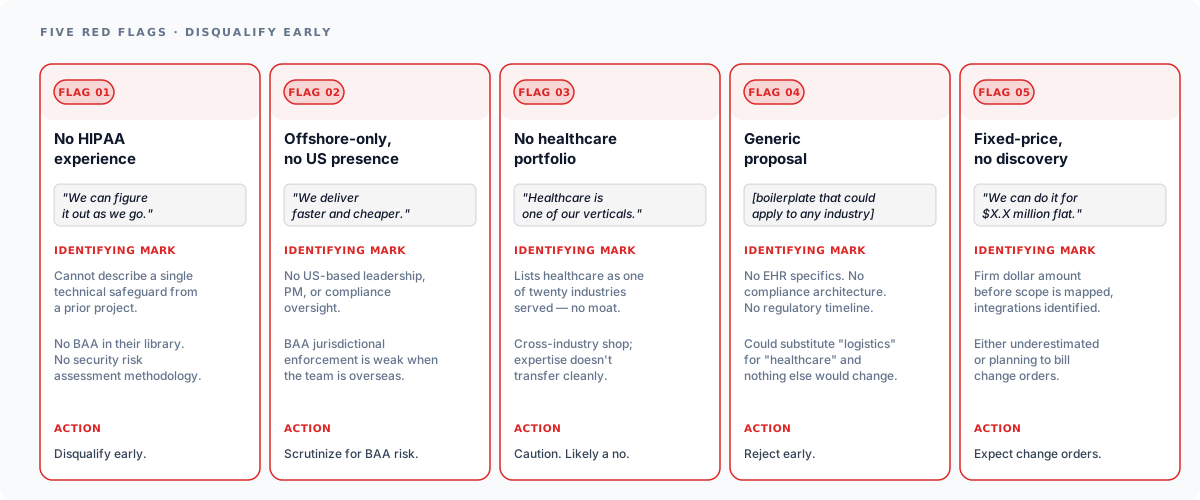
No Demonstrable HIPAA Experience
If a vendor cannot provide specific examples of HIPAA-compliant systems they have built, including the technical controls they implemented, they are not ready for healthcare work. “We can figure it out” is not an acceptable answer when PHI is involved.
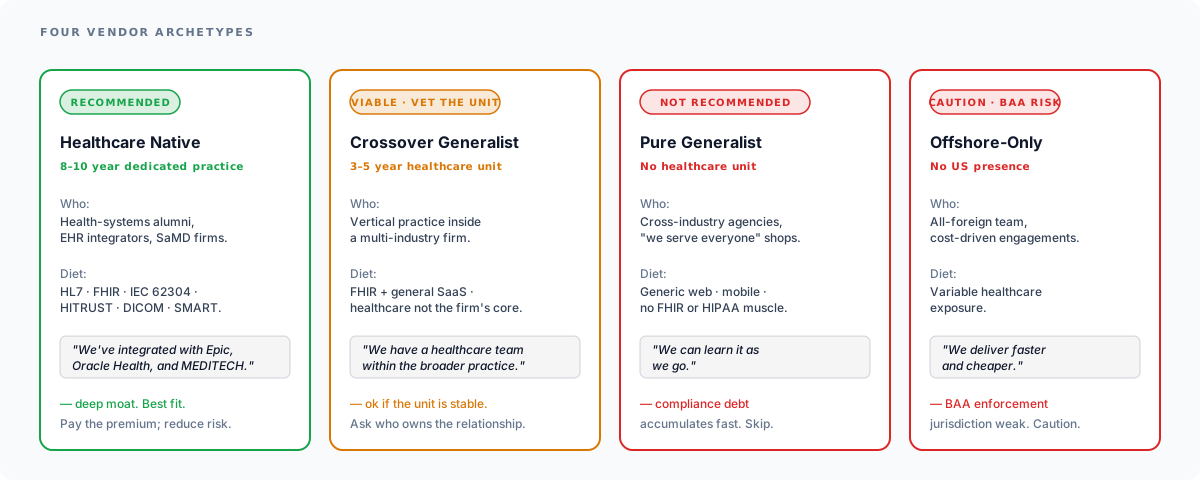
Offshore-Only Teams with No US Presence
Offshore development is not inherently problematic, but a vendor with no US-based team members raises concerns about:
- HIPAA jurisdiction. Enforcement mechanisms for BAAs are weaker when the development team is entirely outside US jurisdiction.
- Communication barriers. Healthcare requirements are nuanced and domain-specific. Miscommunication about clinical workflows or regulatory requirements can result in costly rework.
- Time zone challenges. Healthcare projects often require rapid iteration with clinical stakeholders who are only available during US business hours.
This does not mean you should reject any vendor with offshore team members. The concern is vendors with no US-based leadership, project management, or technical oversight.
No Healthcare Portfolio
A vendor that has built excellent software for fintech, e-commerce, or logistics may still be a poor fit for healthcare. The regulatory constraints, integration requirements, and clinical workflow considerations are sufficiently unique that cross-industry experience does not transfer cleanly. Look for vendors who have dedicated healthcare practices, not firms that list healthcare as one of twenty industry verticals.
Generic Proposals
If a vendor’s proposal could apply to any software project in any industry, they have not done the work to understand healthcare-specific requirements. A credible healthcare software proposal should address:
- Compliance architecture (not just a mention of HIPAA)
- Integration strategy (specific EHR systems and standards)
- Clinical workflow analysis approach
- Security controls beyond standard web application security
- Regulatory timeline considerations
Fixed-Price Bids Without Discovery
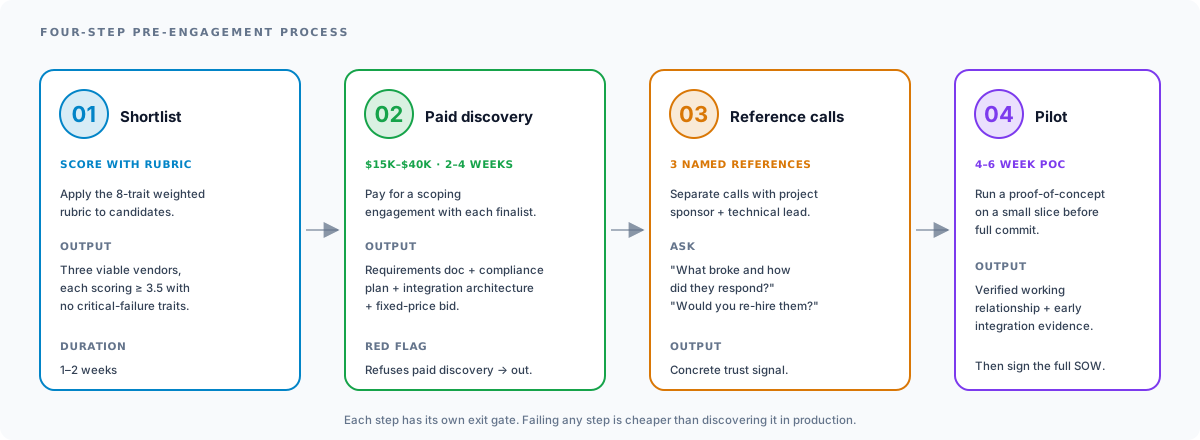
Healthcare software projects involve significant unknowns, particularly around integration complexity and regulatory requirements. A vendor that offers a firm fixed price before conducting a thorough discovery phase is either underestimating the work or planning to charge for changes later. Look for vendors who propose a paid discovery phase before committing to a fixed scope and price.
RFP Checklist: 15 Must-Ask Questions
Include these questions in your RFP or initial vendor evaluation. The quality and specificity of the answers will tell you more than any capabilities presentation.
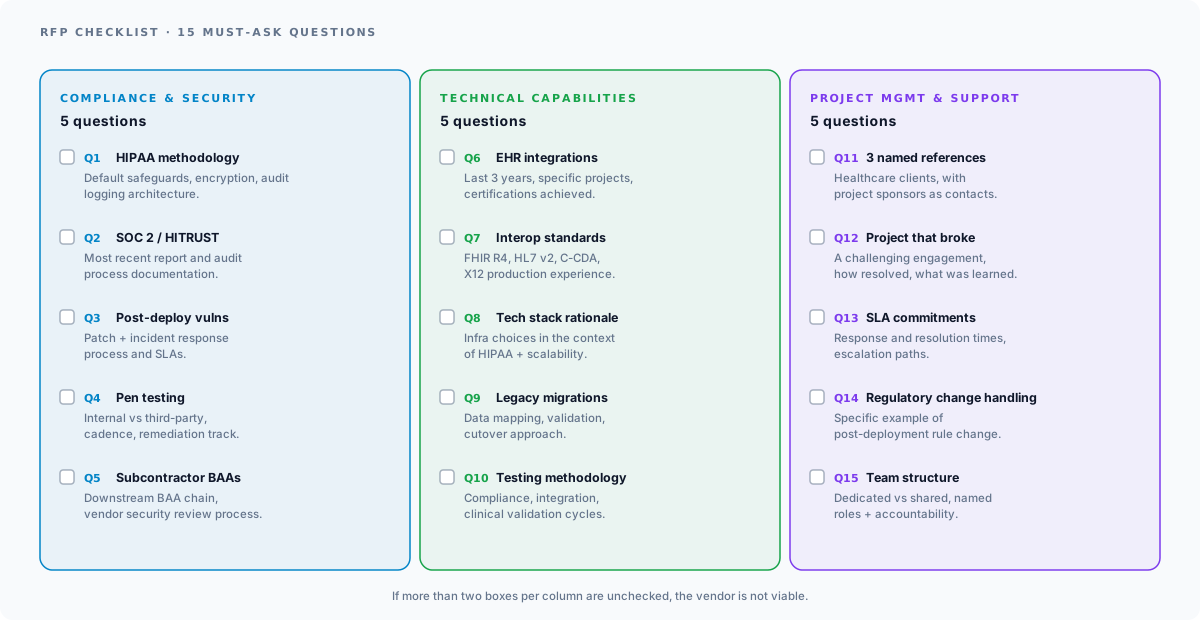
Compliance and Security
- Describe your HIPAA compliance methodology. What specific technical and administrative safeguards do you implement by default in healthcare applications?
- Provide your most recent SOC 2 Type II report or HITRUST certification. If neither exists, describe your security audit process.
- How do you handle security vulnerabilities discovered after deployment? Describe your patch management and incident response process, including timelines.
- What is your approach to penetration testing? Do you use internal teams, third-party firms, or both? How frequently?
- How do you ensure subcontractors comply with HIPAA requirements? Describe your downstream BAA and security oversight process.
Technical Capabilities
- Which EHR systems have you integrated with in the last three years? Provide specific project examples, integration standards used, and any certifications achieved.
- Describe your approach to healthcare data interoperability. Which standards (FHIR, HL7 v2, C-CDA, X12) do you have production experience with?
- What is your technology stack for healthcare applications, and why? Explain your infrastructure choices in the context of HIPAA compliance and scalability.
- How do you handle data migration from legacy healthcare systems? Describe your approach to data mapping, validation, and cutover.
- What is your testing methodology for healthcare applications? Include compliance testing, integration testing, and clinical validation.
Project Management and Support
- Provide three references from healthcare clients with similar project scope. Include contact information for project sponsors or technical leads.
- Describe a healthcare project that encountered significant challenges. How were they resolved? What was the impact on timeline and budget?
- What are your post-launch SLA commitments? Provide your standard SLA tiers, response times, and escalation procedures.
- How do you handle regulatory changes that affect deployed software? Describe a specific example where a regulation change required a product update.
- What is your team structure for a project of this scope? Identify the specific roles (project manager, architect, developers, QA, compliance) and whether team members are dedicated or shared.
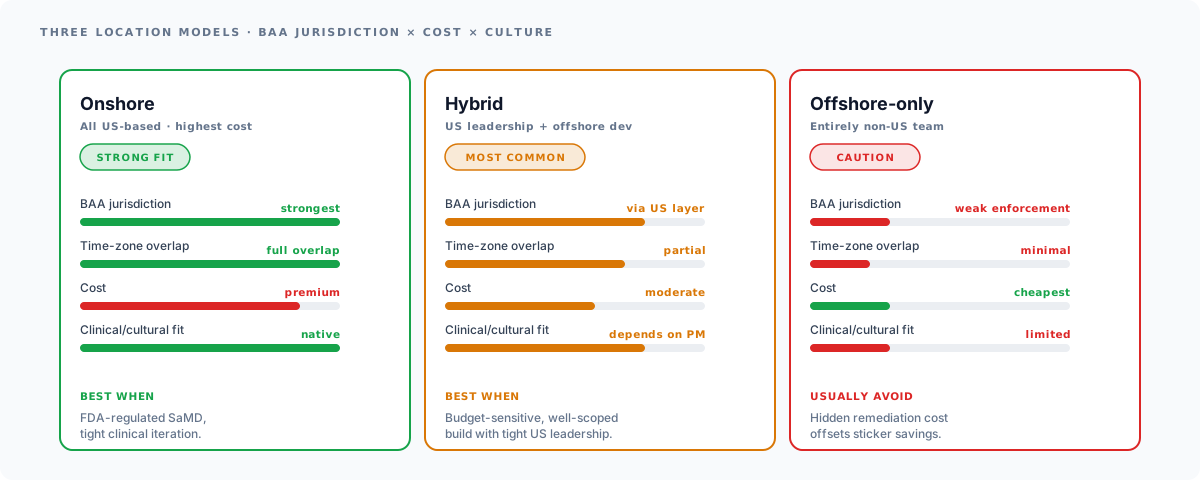
Offshore vs. Onshore: Making the Right Call
The offshore development debate is particularly nuanced in healthcare. Here is a balanced assessment.
Where Offshore Teams Excel
- Scale. Large development teams can be assembled quickly at lower cost.
- Commodity development. Well-defined, repetitive development tasks with clear specifications.
- Round-the-clock coverage. Time zone differences enable follow-the-sun development for teams that manage handoffs well.
Where Offshore Teams Struggle in Healthcare
- Regulatory nuance. HIPAA, FDA, and CMS requirements are US-specific and constantly evolving. Teams without direct exposure to the US healthcare system often miss compliance subtleties.
- Clinical context. Understanding why a clinician needs a specific workflow requires cultural and domain context that is difficult to transfer across an ocean.
- IP protection. Some jurisdictions offer weaker intellectual property protections, which matters when your software embodies proprietary clinical algorithms or business logic.
- Compliance auditing. Auditing security practices at offshore facilities is more complex and expensive than auditing US-based teams.
The Hybrid Model
Many successful healthcare software projects use a hybrid model: US-based project management, architecture, and compliance oversight with offshore development resources for well-defined tasks. This approach captures cost benefits while maintaining the regulatory and domain expertise where it matters most.
The key question is not “onshore or offshore” but rather “where does the compliance and clinical expertise reside?” If the answer is “entirely offshore,” that is a significant risk factor.
Total Cost of Ownership
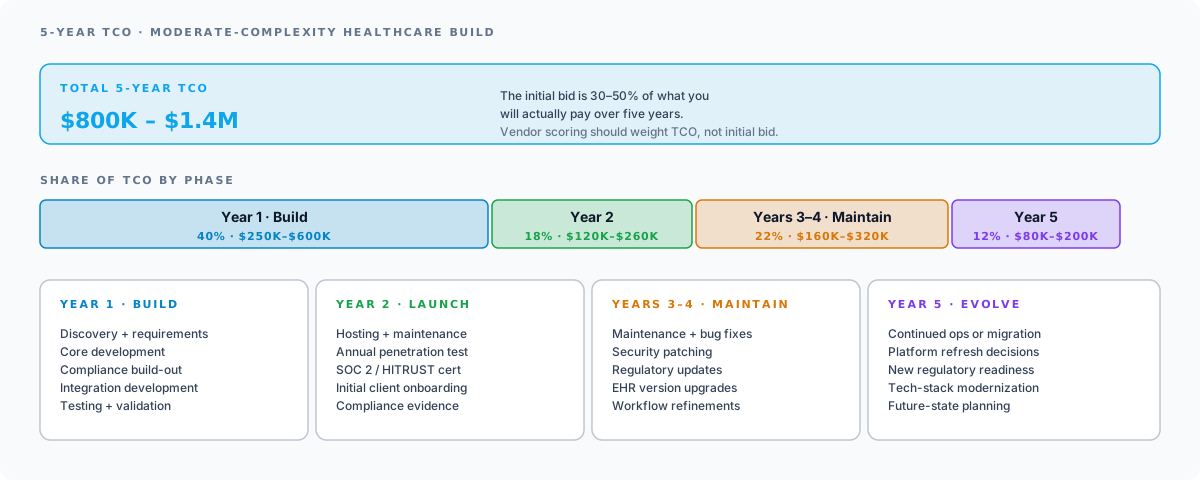
Evaluating vendors solely on development cost is a common and costly mistake. Healthcare software has significant ongoing costs that must factor into your decision.
Development Costs
The initial build is typically 30-50% of the five-year total cost of ownership. Development costs for healthcare applications include:
- Discovery and requirements (often 10-15% of project cost)
- Core development (the largest single cost component)
- Compliance implementation (adds 15-30% to base development cost)
- Integration development (highly variable: $30K-$150K+ per EHR integration depending on complexity)
- Testing and validation (10-20% of development cost, higher for FDA-regulated software)
Compliance Costs
Ongoing compliance is not free:
- Annual penetration testing ($15K-$50K per assessment)
- HITRUST or SOC 2 certification ($50K-$150K initial, $30K-$80K annual recertification)
- Compliance monitoring tools ($5K-$25K/year)
- Regulatory update implementation (variable, budget 5-10% of annual maintenance for regulatory changes)
Maintenance and Operations
- Hosting and infrastructure ($2K-$15K/month depending on scale and redundancy requirements)
- Ongoing maintenance and bug fixes (typically 15-20% of initial development cost per year)
- Security patching and updates (continuous, included in maintenance or billed separately)
- Clinical workflow updates (as care processes evolve, the software must evolve with them)
The True Comparison
When comparing vendors, build a five-year TCO model that includes all of these cost categories. A vendor with a higher initial development cost but better compliance practices and more efficient maintenance may be significantly cheaper over the full lifecycle. Conversely, the cheapest development bid often becomes the most expensive option when compliance remediation, security incidents, and integration rework are factored in.
Making the Final Decision
After scoring vendors against your evaluation criteria, conducting reference checks, and building TCO models, the final decision often comes down to trust and fit.
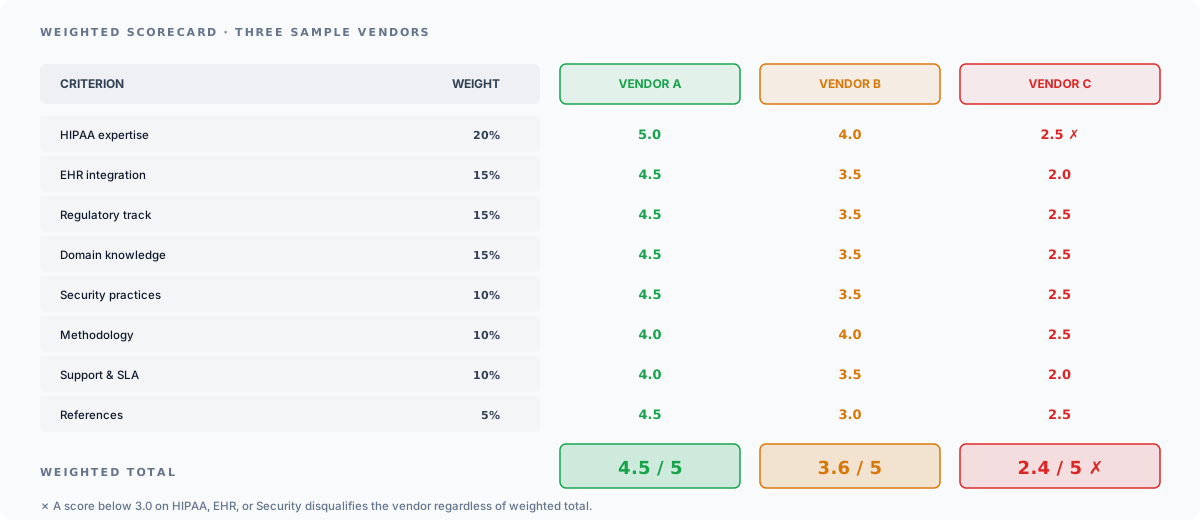
Weight Compliance Expertise Heavily
In healthcare, compliance failures have consequences that go beyond project timelines: OCR investigations, breach notifications, patient harm, and reputational damage. A vendor with deep compliance expertise is worth a premium.
Prioritize Integration Experience
If your software needs to connect to EHR systems, a vendor’s integration track record is the strongest predictor of project success. EHR integrations are where most healthcare software projects encounter unexpected complexity. A partner experienced in healthcare software development, including SaMD and medical software work, will anticipate integration challenges before they become project risks.
Look for Long-Term Partnership Potential
Healthcare software is never “done.” Regulations change, clinical workflows evolve, and new integration requirements emerge continuously. Choose a vendor you can work with for years, not just months. The best healthcare software development relationships are partnerships, not transactions.
Start with Discovery
Before committing to a full development engagement, invest in a paid discovery phase. A good discovery phase produces detailed requirements, a compliance plan, an integration architecture, a realistic timeline, and a defensible cost estimate. It also gives both parties a low-risk opportunity to evaluate the working relationship.
The right healthcare software development company will not just build what you spec. They will challenge your assumptions, identify regulatory risks you have not considered, and propose solutions informed by experience across dozens of similar projects. That expertise is what separates a healthcare software partner from a generic development shop.
Saga IT provides healthcare software development and HIPAA compliance consulting for health systems, digital health companies, and healthcare technology vendors. Learn more about our team.